Winrunner Testing Tool Free Download For Windows Xp
Win Runner What's New in WinRunner 7.5? Automatic Recovery The Recovery Manager provides an easy-to-use wizard that guides you through the process of defining a recovery scenario. You can specify one or more operations that enable the test run to continue after an exception event occurs.
This functionality is especially useful during unattended test runs, when errors or crashes could interrupt the testing process until manual intervention occurs. Silent Installation Now you can install WinRunner in an unattended mode using previously recorded installation preferences.
This feature is especially beneficial for those who use enterprise software management products or any automated software distribution mechanisms. Enhanced Integration with TestDirector WinRunner works with both TestDirector 6.0, which is client/server-based, and TestDirector 7.x, which is Web-based. When reporting defects from WinRunner’s test results window, basic information about the test and any checkpoints can be automatically populated in TestDirector’s defect form. WinRunner now supports version control, which enables updating and revising test scripts while maintaining old versions of each test.
Support for Terminal Servers Support for Citrix and Microsoft Terminal Servers makes it possible to open several window clients and run WinRunner on each client as a single user. Also, this can be used with LoadRunner to run multiple WinRunner Vusers. Support for More Environments WinRunner 7.5 includes support for Internet Explorer 6.x and Netscape 6.x, Windows XP and Sybase's PowerBuilder 8, in addition to 30+ environments already supported by WinRunner 7. WinRunner provides the most powerful, productive and cost-effective solution for verifying enterprise application functionality.
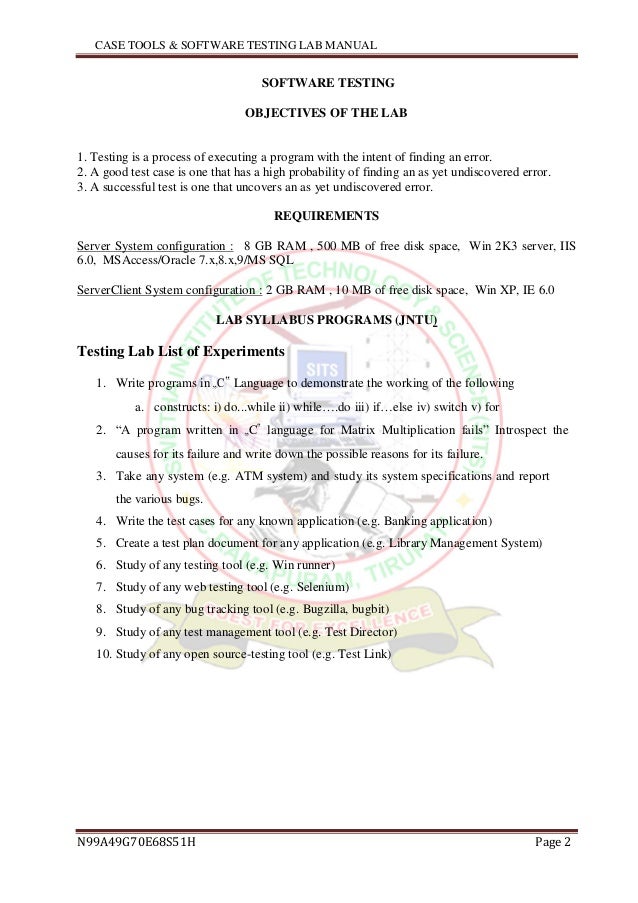
For more information on WinRunner, contact a Mercury Interactive local representative for pricing, evaluation, and distribution information. WinRunner(Features & Benefits) Test functionality using multiple data combinations in a single test WinRunner's DataDriver Wizard eliminates programming to automate testing for large volumes of data.
This saves testers significant amounts of time preparing scripts and allows for more thorough testing. Mutants and masterminds 2nd edition pdf free download. Significantly increase power and flexibility of tests without any programming The Function Generator presents a quick and error-free way to design tests and enhance scripts without any programming knowledge. Testers can simply point at a GUI object, and WinRunner will examine it, determine its class and suggest an appropriate function to be used. Use multiple verification types to ensure sound functionality WinRunner provides checkpoints for text, GUI, bitmaps, URL links and the database, allowing testers to compare expected and actual outcomes and identify potential problems with numerous GUI objects and their functionality.
Verify data integrity in your back-end database Built-in Database Verification confirms values stored in the database and ensures transaction accuracy and the data integrity of records that have been updated, deleted and added. View, store and verify at a glance every attribute of tested objects WinRunner’s GUI Spy automatically identifies, records and displays the properties of standard GUI objects, ActiveX controls, as well as Java objects and methods. This ensures that every object in the user interface is recognized by the script and can be tested. Maintain tests and build reusable scripts The GUI map provides a centralized object repository, allowing testers to verify and modify any tested object. These changes are then automatically propagated to all appropriate scripts, eliminating the need to build new scripts each time the application is modified. Test multiple environments with a single application WinRunner supports more than 30 environments, including Web, Java, Visual Basic, etc.
INDEX - Jump table: More information about Audio/Digital/Scanning/Photo/Printing/TV/Video Terms may be found. More information about Pharma/Biological/Pharmaceutical Terms may be found at. You can use your Broweser's Find function to locate a specific term. T - an MFC macro used to make string literals character set neutral.:: - global scope resolution operator (WIN).
Ensures that the API function is called even if the object that makes the call has a member function of the same name. 1080i - 1080 lines of inter-laced vertical video resolution - this IS an HDTV format. 1080p - 1080 lines of Progressive vertical (NON-laced video content. this IS an HDTV format. 1BASE5 - Implementing the IEEE 802.3 standard 1Mbps transmission on a baseband medium with a maximum segment length of 500 meters.
1G - analog mobile phone service 2G - 2G is digital mobile phone service, and includes SMS and text messaging. Second generation (2G) wireless data networks in Japan deliver datarates up to 9.6 kbps for upload and up to 29.8 kbps for download. 3DES - Triple Data Encryption Standard 3DNS - is a wide area load balancer from. The 3DNS Controller is a high availability, intelligent load balancing solution for geographically distributed Internet sites and data centers. 3DNS manages and distributes user requests across multiple, redundant server sites – regardless of the platform type or combination and without requiring additional software on the servers.
User requests are distributed according to factors such as round trip time, number of active servers, packet loss, etc. And, the 3DNS Controller can be configured to make traffic distribution decisions according to what is most important for an organization’s network. it takes a request (for a web site for instance) and looks at the best route to get there. 3G - Third generation wireless networks in Japan deliver datarates on the order of 64 kbps for upload and on the order of 200 kbos for downlad.
These higher speeds allow the transmission of video and two-way video telephony. Other data connections, e.g. Download of information or JAVA applets, are also several times faster on 3G networks then on older 2G networks. In Japan there are three parallel, independent and competing 3G networks. In U.S, 3G currently (12/03) supports 300 to 500 kilobits per second, with bursts up to 2 mbps. 3GPP - Third Generation Partnership Project (3GPP) is a collaboration agreement that was established in December 1998.
The collaboration agreement brings together a number of telecommunications standards bodies which are known as 'Organizational Partners'. The current Organizational Partners are ARIB, CCSA, ETSI, ATIS, TTA, and TTC. The original scope of 3GPP was to produce globally applicable Technical Specifications and Technical Reports for a 3rd Generation Mobile System based on evolved core networks and the radio access technologies that they support (i.e., Universal Terrestrial Radio Access (UTRA) both Frequency Division Duplex (FDD) and Time Division Duplex (TDD) modes). The scope was subsequently amended to include the maintenance and development of the Global System for Mobile communication (GSM) Technical Specifications and Technical Reports including evolved radio access technologies (e.g. General Packet Radio Service (GPRS) and Enhanced Data rates for GSM Evolution ).
3GPP2 - Third Generation Partnership Project 2 (3GPP2) - Developing the next generation of cdma2000 wireless communications. Third-Generation Partnership Project 2 is a collaborative effort for Generating 3G specifications for providing high-speed IP-based mobile systems. It was established for developing global specifications for network evolution from ANSI/TIA/EIA-41 to 3G, and global specifications for the radio transmission tehcnologies supported by ANSI/TIA/EIA-41.
3GPP2 is mainly supported in North America, China, Japan and South Korea and continues to play a dominant role in bringing IP technology to these cellular markets. 3GPP2 was born out of the International Telecommunication Union (ITU) International Mobile Telecommunications-2000 (IMT-2000) initiative for providing high-speed data over the wireless network. Although discussions did take place between ETSI and the ANSI-41 community to consolidate collaboration efforts for 3G, in the end it was deemed appropriate to establish 3GPP2 as a parallel partnership project. 3PAR - HP's 3PAR Inc. Is a manufacturer of systems and software for data storage and information management.
480i - 480 vertical lines of inter-laced video content - NOT an HDTV format. 4G - At present the download speed for imode data is limited to 9.6 kbit/sec which is about 6 times slower than an ISDN fixed line connection.
With 504i handsets the download data rate was increased 3-fold to 28.8kbps. However, in actual use the data rates are usually slower, especially in crowded areas, or when the network is 'congested'. For third generation mobile (3G) data rates are 384 kbps (download) maximum, typically around 200kbps, and 64kbps upload since spring 2001. Fourth generation (4G) mobile communications will have higher data transmission rates than 3G. 4G mobile data transmission rates are planned to be up to 20 megabits per second. a monitor/TV that displays about 4K (4,000) of video (pixels).
Winrunner Testing Tool Free Download For Windows Xp
Apple manipulates a 4K signal to produce a 5K display. Apple's (2014) monitor/TV that displays about 5K (5,000) of video (pixels) 5-S - Essential in Lean Manufacturing is The 5-S Philosophy (Five Japanase Words). Also '5S' or '5 S'. Based on five Japanese words that begin with ‘S’, the 5S Philosophy focuses on effective work place organization and standardized work procedures: 6B/10B - 64B/66B - 720p - 720 vertical lines of Progressive (NON-interlaced) video content.
This is the lowest quality, true HDTV format. 10 Gigabit Ethernet - The new 10 gigabit Ethernet standard encompasses seven different media types. 10Base2 - Old 'Cheapernet' (also 'thinnet') with thin coaxial cable and trunk/drop topology.
Maximum single segment length = 185 meters (600 feet). 10Base5 - Old 'Thicknet' (also 'yellow cable') with thick coaxial cable and trunk/drop topology Maximum single segment length = 500 meters (1,640 feet). 10baseFL - 10Mbps fiber optic Ethernet 10BaseT - Standard 'Plain Vanilla' Ethernet based on Unshielded Twisted Pair wire 21 CFR part 11 - Electronic Records and Electronic Signatures - the rule was issued in 1997.
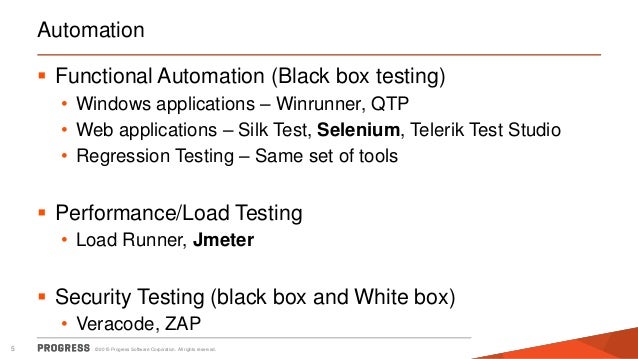
31 CFR Part 210 - Federal Government Participation in the Automated Clearing House 100BaseFX - Implementing the IEEE 802.3 Ethernet standard using 100Mbps transmission on a baseband medium, using multi-mode fiber-optic cable. The maximum distance limitation of multi-mode fiber is 412 meters for half-duplex and 2km when configured in full-duplex mode. Distances greater than 2kms are archieved when implemented over single mode fiber. 100BaseT - Implementing the IEEE 802.3 standard using 100Mbps transmission on a baseband medium, using UTP wiring. The maximum distance limitation of UTP is 100 meters. 100BaseT4 - Implementing the IEEE 802.3 (Ethernet) standard using 100Mbps transmission on a baseband medium, using four pairs of category 3,4 or 5 UTP wiring.
An alternative standard for 100Mbps Ethernet. The maximum distance limitation of each segment is 100 meters. 100BaseTX - Implementing the IEEE 802.3 (Ethernet) standard using 100Mbps transmission on a baseband medium. This standard enables attaching AUI-compatible devices to 24 guage, unshielded twisted-pair cable, rather than the usual coaxial media. The leading standard for 100Mbps Ethernet. The maximum distance limitation of each segment is 100 meters.
100BaseX - Fast Ethernet specification using 100Mbps transmission, which refers to the 100BASEFX and 100BASETX standards for Fast Ethernet over fiber-optic cabling. 100VG-AnyLAN - 100Mbps Fast Ethernet and Token Ring media technology that uses four pairs of catagory 3, 4 or 5 UTP cabling.
Not as popular as 100BaseT. 3270 - Family of IBM mainframe terminals 3270 EIS - The SNA Server 3270 Emulator Interface Specification 3c810 - Symbios Logic (NCR) 'npsc' SCSI controller often shipped attached to internal bus on DG systems 3x74 - Family of IBM cluster controllers 37xx - Family of IBM front-end processors 4G - theoretically supports 100 mbps. NTT is testing this now (12/2003). 7 Layer Networking - transport, session, presentation and application 100baseFX - Fast Ethernet on Optical Fibre (on Fibre Channel) 100baseT - Standard 'Fast Ethernet' based on twisted pair copper wire 837 - ANSI, Part 837 - Insurance Transactions 5250 - Family of IBM AS/400 terminals IEEE 802 family of standards 802.1 - 802.1p/Q - IEEE standard for frame prioritization 802.1Q - IEEE standard for VLAN tagging 802.2 - 802.3 - IEEE standard known in the vernacular as ' - CSMA/CD - Maintenance #8 (Revision). 802.3a - IEEE standard for 10-Gbps Ethernet 802.3ad - IEEE standard for link aggregation 802.3af - Power over Ethernet (POE). 802.3an - 802.3ap - 802.3aq - 802.3ar - 802.3as - 802.3x - IEEE standard for link-layer flow control using PAUSE frames.
802.3z - IEEE standard for Gibabit Ethernet.